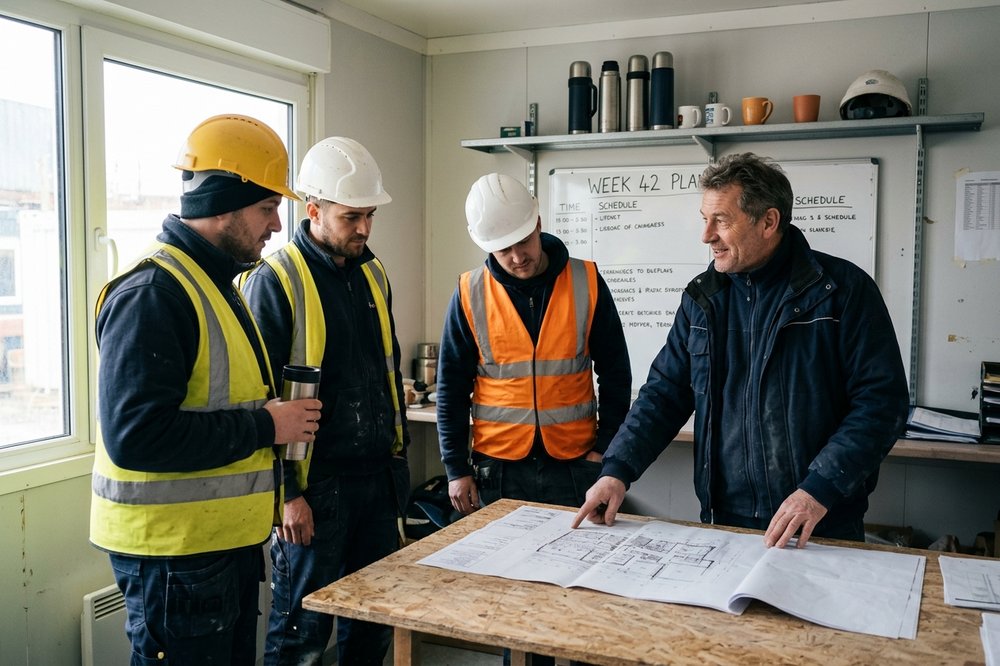
Construction is a sector where the experience of Armenian workers is often genuinely valued. European construction companies and subcontractors recruit both general labourers and qualified tradespeople: bricklayers, concrete workers, rebar fixers, formwork carpenters, tilers, drywall installers and painters.
A construction job in Europe usually means working on an outdoor site or inside a building, with heavy physical demands, strict safety rules and often a changing workplace: when a project ends, the team moves to the next site. Some work slows in winter, which can affect hours.
In this sector it is especially important to understand who your employer is (the construction company, a subcontractor or an agency) and how the work is paid: by the hour or by the volume completed.
Typical roles
- General construction labourer
- Bricklayer
- Concrete and formwork worker
- Rebar fixer
- Tiler
- Drywall and finishing tradesperson
- Painter
- Roofer
Common requirements
- Labourer roles: physical fitness and willingness to learn
- Tradespeople: verifiable experience; employers often ask for photos of completed work or a practical test
- On-site safety induction; some countries require a safety certificate, which the employer arranges
- Basic language skills to understand instructions; crews often have Russian- or Ukrainian-speaking supervisors
- Separate requirements and a medical check for work at height
What changes from one vacancy to the next
These points are never universal. The specific vacancy must disclose them, and we do not publish a vacancy until they are confirmed in writing.
- Whether pay is an hourly rate or by volume completed (piecework)
- Guaranteed hours during bad weather or between projects
- Whether tools and safety clothing are provided
- Accommodation near the site or in town, and its cost
- Transfers between sites and who pays for them
- Contract type and length: tied to project completion or fixed
Verified vacancies in this category
No verified vacancies in this category right now. Get an alert when one is published.
Questions candidates ask about this category
Does my construction qualification need to be recognised in Europe?
Most construction workers do not need formal recognition: the employer judges practical skills. Exceptions are some regulated trades, for example electricians, crane operators and people working at height, who may need a local certificate. The specific vacancy states which certificate is needed and who arranges it.
What does piecework pay mean in construction?
Piecework means you are paid by the volume completed (for example square metres of tiling) rather than by the hour. For experienced tradespeople it can pay more, but the risk sits with you: bad weather, late materials or a difficult site reduce income. Check whether there is a guaranteed minimum and how it compares with the country's minimum wage.